



Saint Paisios the Athonite
Saint Paisios (Arsenios Eznepidis) was born in Farasa, Cappadocia, on July 25, 1924. He reposed on July 12, 1994, and was buried in the Monastery of Saint John the Theologian in Souroti. He was well-known in our country.
Father Isaac Atallah, an Athonite from Nabieh, Lebanon, was his contemporary and mentor. Father Atallah was a spiritual father to many monks, seminarians, and laypeople in our country. He wrote a detailed biography in the book, “Elder Paisios the Athonite,” published by Mount Athos Publications, 2006.
He was canonized by the Holy Synod of the Ecumenical Patriarchate of Constantinople on January 13, 2015. His feast day is July 12, the anniversary of his repose.
In the Orthodox Church, holiness is based on a life imbued with the works of the Holy Spirit. Miracles are not a prerequisite, though they may occur. Righteousness in Christ, that is, a virtuous life through the Holy Spirit, is the foundation of the proclamation of holiness in our Church. Life is the Word lived. Thus, holiness is manifested in the incarnation of the Word in the life of the saint; the saint becomes an icon of the Incarnate Word and His teachings, which are the life of the age to come.
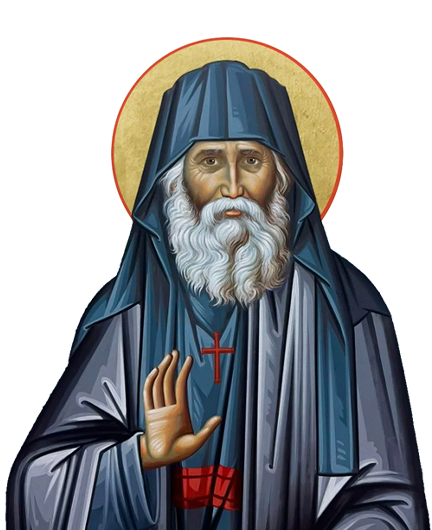
Saint Paisios possessed a profound pastoral sense. He deeply understood people’s difficulties and problems, and with humor, he taught and comforted them. His prayers were fervent, passionate, and answered. He saved a boy from a car accident while praying for travelers in his cell. He also appeared to another man who was about to visit him to ask for his prayers, spoke with him, and healed him, all without leaving his cell. The Lord granted him the grace of spiritual movement in prayer because of his great humility.
He taught that there is only one virtue, which is humility, and one vice, which is pride. He considered self-love, or selfishness, to be the mother of all passions, because all carnal or psychological passions draw their strength from it. Therefore, “the humble person is compassionate and beloved, while the proud person is repulsive. No one loves the proud person; even God Himself avoids them.”
Our saint emphasizes that divine grace, which sustains the person striving to live according to the commandments, ceases to dwell within them when they act according to their own will and desires. He says, “Beware! For in this way you drive away grace.” For him, “the struggle against passions is a continuous witness to the commandments out of love for Christ. A heroic death is better than defeat at the hands of the enemy.”
He always encouraged and gave hope to those who came to him: “Let your words be: ‘With God’s help, I will try to reconcile,’ and God will grant the help.” But he did not accept complacency and laziness. Instead, he taught, “We mistakenly believe that we can acquire virtues and holiness without striving. For the Lord to give, we must sow. God sends the rain, waters the soil, and prepares it. Then it is our turn to plow the field and sow the seeds.”
“Whoever practices and teaches will be called great in the kingdom of heaven” (Matthew 5:19). Saint Paisios the Athonite taught by his life; therefore, his teachings and words were nothing less than his own life and experience, which he lovingly passed on to the world in the image of his Master.
The Lord has given us a fervent intercessor in these latter times. Let us cling to him as a companion and guide to the Lord, and let us pray:
Through the intercession of Your Saint Paisios the Athonite, O Lord Jesus Christ our God, have mercy on us and save us. Amen.